
Article: The 5-minute ritual: Caring for your cast iron
The 5-minute ritual: Caring for your cast iron
The myth that cast iron is "High Maintenance" is just that—a myth. Let’s talk about why the oldest cookware in the world is actually the easiest to own.
The Fear
Let’s be honest. There is a general fear—often fueled by WhatsApp forwards, hearsay, or claims of organizations selling you coated utensils—that cast iron is difficult. People say it rusts, it requires constant maintenance, or it needs repeated seasoning.
But let’s flip the script. Think about your modern non-stick or coated pan. It likely came with a long list of "Don’ts":
-
Don’t use a metal spoon.
-
Don’t use a harsh scrubber.
-
Don’t overheat it.
You walk on eggshells every time you cook, terrified of that first scratch. And the moment that scratch appears—usually within 3 to 5 years—that expensive pan is destined for the dustbin. It’s useless.
Now, look at a Bhumi Indica cast iron pan. It is Dheet (stubbornly tough). You can drop it, scrape it with a steel ladle, or sear at high heat. It doesn’t complain. While synthetic coatings deteriorate with every meal, raw cast iron actually gets better. The more you use it, the smoother and blacker it becomes. It’s the only thing in your kitchen that ages backwards.
So, what’s actually "High Maintenance"? The pan you have to baby, or the one that survives generations?
The Frequency Rule
A lot of the stress about maintenance comes from not understanding the "Frequency Rule." Think of your pan like a car engine:
The Daily Driver
If you use your Tawa for rotis or your Kadai for sabzi every day, you barely need to do anything. The oil and heat from your daily cooking keep the seasoning alive. The pan stays happy because it’s being used.
The Occasional Cook
If you only pull out the Kadai for a Sunday mutton curry, the iron sits idle. In our humid Indian weather, moisture is the enemy. In this case, you just need to be a little more deliberate about drying and oiling it before you put it away.
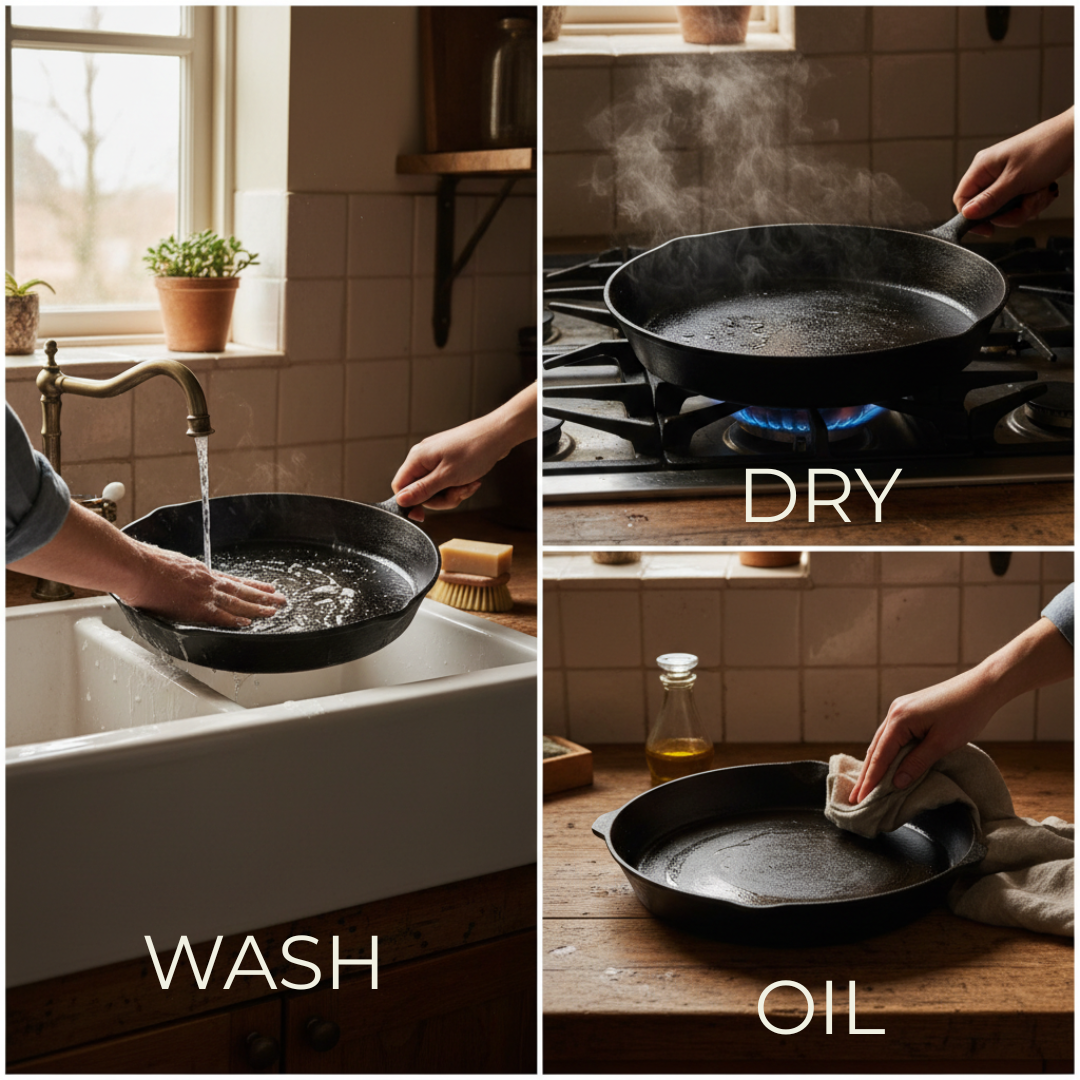
The Simple Ritual: Wash, Dry, Oil
Caring for your pan isn't a chore; it’s a quick ritual. It takes exactly 5 minutes.
-
The Wash: Use your regular kitchen liquid detergent and a sponge if food is stuck. If not, simply wash it under running water.
-
The Dry (Most Important): Never let it drip dry on the rack or air dry. Wipe the pan dry, put it on the stove, and let heat evaporate every drop of moisture.
-
The Oiling: While the pan is still warm, take a drop of oil on a paper towel and give it a quick rub—inside and out. You aren't frying it; you’re just moisturizing the "skin" of the iron.
Storage Tip: If you stack your pans in a drawer, place a paper towel or a cotton cloth in between them. It prevents scratches and soaks up any hidden moisture.
Rust is Not the End
Here is the biggest fear: Orange Spots. If one day you open your cabinet and see rust, don’t panic. You haven't ruined the pan. Unlike chipped enamel (which releases glass shards into your food) or scratched Teflon (which releases microplastics), rust on iron is just surface-level.
The fix is easy:
-
Scrub the rust off with steel wool (be aggressive—it can take it!).
-
Wash it, dry it, and oil it.
-
Heat it until it smokes.
Your pan is reborn!
Why We Do It: The "Sehat" Connection
Why go through even this 5-minute ritual? Why not just buy the cheap plastic-coated stuff? Because convenience has a hidden cost.
When you cook in a Bhumi Indica utensil, you aren't just making food; you are fortifying it. You are embracing a method that our Dadis and Nanis trusted long before "non-stick" existed. They didn't have anemia, and they didn't eat microplastics.
A little bit of care for your cast iron is a small price to pay for a lifetime of toxin-free, nutrient-rich meals. It’s a relationship, not a transaction. Treat it well, and it will feed your great-grandchildren.

Leave a comment
This site is protected by hCaptcha and the hCaptcha Privacy Policy and Terms of Service apply.