
Article: Why Your Non-Stick Pan Can’t Sear (And The Physics of the Perfect Crust)
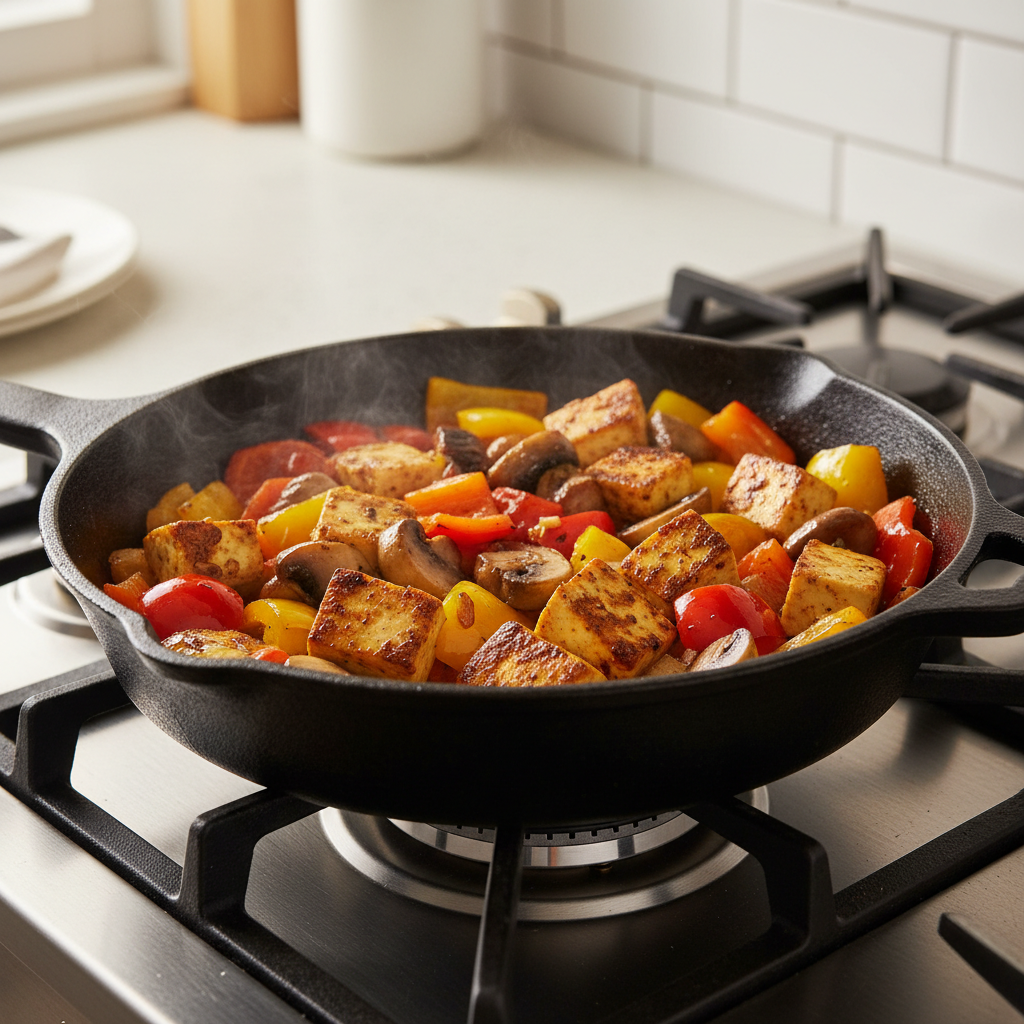
Why Your Non-Stick Pan Can’t Sear (And The Physics of the Perfect Crust)
We have all been there. You buy fresh Paneer, you marinate it perfectly with dahi and spices, and you place it on your non-stick tawa. You are waiting for that tandoori-style char, but instead... nothing happens.
The paneer releases water (paani chhod deta hai). Instead of frying, it starts boiling in its own juices. The result? Rubbery, pale paneer that lacks that smokey flavor.
Why does this happen? It’s not your recipe. It’s not your stove. It’s your pan.
To understand why, we need to talk about the difference between a "conductor" and a "battery." Don't worry, we’ll keep the physics lesson short.
The Villain: The "Thanda" Effect
Imagine your lightweight non-stick pan is a small bucket of water. When you drop a big block of cold paneer into it, the water temperature drops instantly.
Thin pans (aluminum or steel) heat up fast, but they have Low Thermal Mass. They don't store energy. So, the moment cold food touches the hot pan, the pan surrenders. Its temperature crashes below 100°C.

The Consequence:
Tragic paneer: As we saw earlier, when the pan cools down the paneer starts boiling in its own released water instead of searing. This is exactly why you end up with that chewy, rubbery texture instead of a soft center with a crispy crust.
Slimy Bhindi: This same drop in temperature is the culprit behind slimy okra. If the heat isn't high enough to sear the skin instantly, the bhindi starts to steam. This slow steaming releases the internal mucilage creating that dreaded "lasalasa-pan" (sliminess) that ruins the texture.
Dry Chicken/Mutton: It’s the same physics for Chicken or Mutton. If the pan cools down when the meat hits it, the outer surface doesn't seal instantly. Instead of locking the juices in, the meat "sweats" them out into the pan, leaving you with a dry, chewy curry instead of succulent pieces.
The Hero: The "Heat Battery"
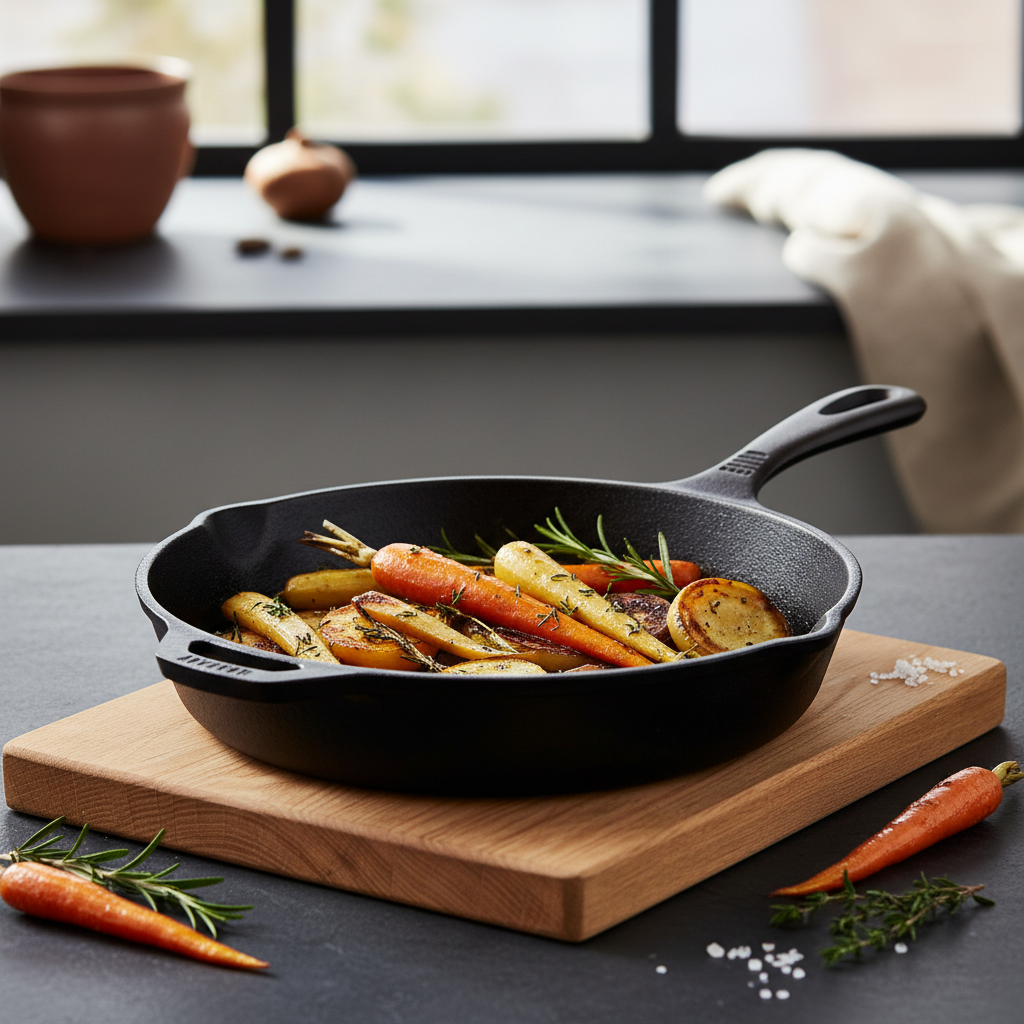
Now, look at a Bhumi Indica Cast Iron Skillet. It is heavy for a reason.
Think of Cast Iron as a massive Heat Battery. It absorbs heat and holds onto it tightly. When you drop that cold marinated chicken onto a pre-heated cast iron pan, the iron "bullies" the food. It has so much stored heat energy that it refuses to cool down.
It forces the heat into the food instantly, rather than letting the food cool the pan.
The Magic: The Maillard Reaction
This is the scientific term for Swad (Flavor).
The Maillard Reaction is the chemical magic that turns a white onion into a golden-brown Birista. It’s what turns raw dough into a brown, crispy Paratha.
The Catch: This reaction only happens effectively above 140°C (285°F).
In a thin pan: You add food → Temp drops to 90°C → No Reaction (Food boils).
In a Cast Iron pan: You add food → Temp stays at 150°C+ → Instant Reaction (Food browns).
The Real-World Test: Iron vs. Non-Stick
Here is how this science changes your daily cooking:
The Crispy Bhindi Test
Non-Stick: You have to use a lot of oil or cook in small batches to keep the heat up.
Cast Iron: The high retained heat sears the outer layer of the bhindi immediately, locking the moisture inside but drying the surface. Result? Kurkuri Bhindi (Crispy Okra) with less oil.
The Tikka Test
Non-Stick: You get spotty browning, but the inside gets chewy because it takes too long to cook.
Cast Iron: The intense radiant heat mimics a Tandoor. You get those charred black/brown edges in seconds while the inside stays soft and juicy.
Conclusion: Weight is a Feature, Not a Bug
When you pick up a Bhumi Indica pan, you might think, "Bhaari hai" (It's heavy).
Yes, it is. But you aren't just lifting iron. You are lifting stored heat energy. That weight is the insurance policy against soggy food. It is the secret ingredient that makes simple Ghar ka Khana taste like it came from a restaurant kitchen.
So next time you want that perfect sear, put down the lightweight pan. Let the heavy metal do the work.

Leave a comment
This site is protected by hCaptcha and the hCaptcha Privacy Policy and Terms of Service apply.